The 7 stages of starting a cleaning business
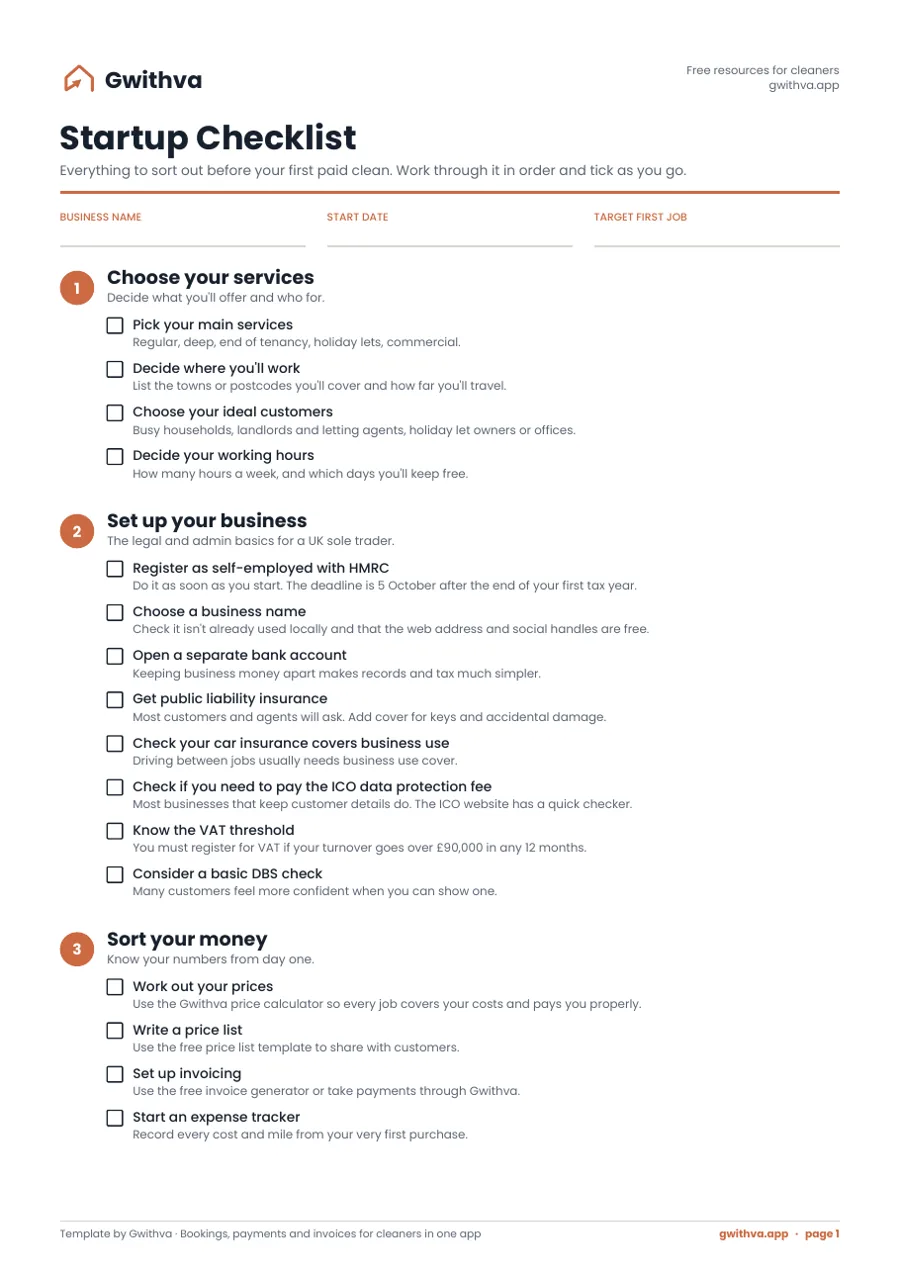
The checklist breaks everything into seven stages. Here's what each one involves.
1. Choose your services
Decide whether you'll focus on regular domestic cleaning, deep cleans, end of tenancy or holiday lets. Starting with one or two services makes your pricing and marketing simpler. Decide which towns or postcodes you'll cover, too.
2. Set up your business
- Register as self-employed with HMRC. You must register by 5 October after the end of the tax year you started trading.
- Get public liability insurance. It covers you if you accidentally damage a customer's property or someone is hurt. Many customers and letting agents will ask to see it.
- Open a separate bank account for business money. It makes your records and tax return much simpler.
- Check data protection. If you keep customers' names, addresses and phone numbers, you may need to pay the ICO's data protection fee. The ICO website has a short self-assessment to check.
- Know the VAT threshold. You only need to register for VAT if your turnover goes over £90,000 in a 12-month period.
3. Sort your money
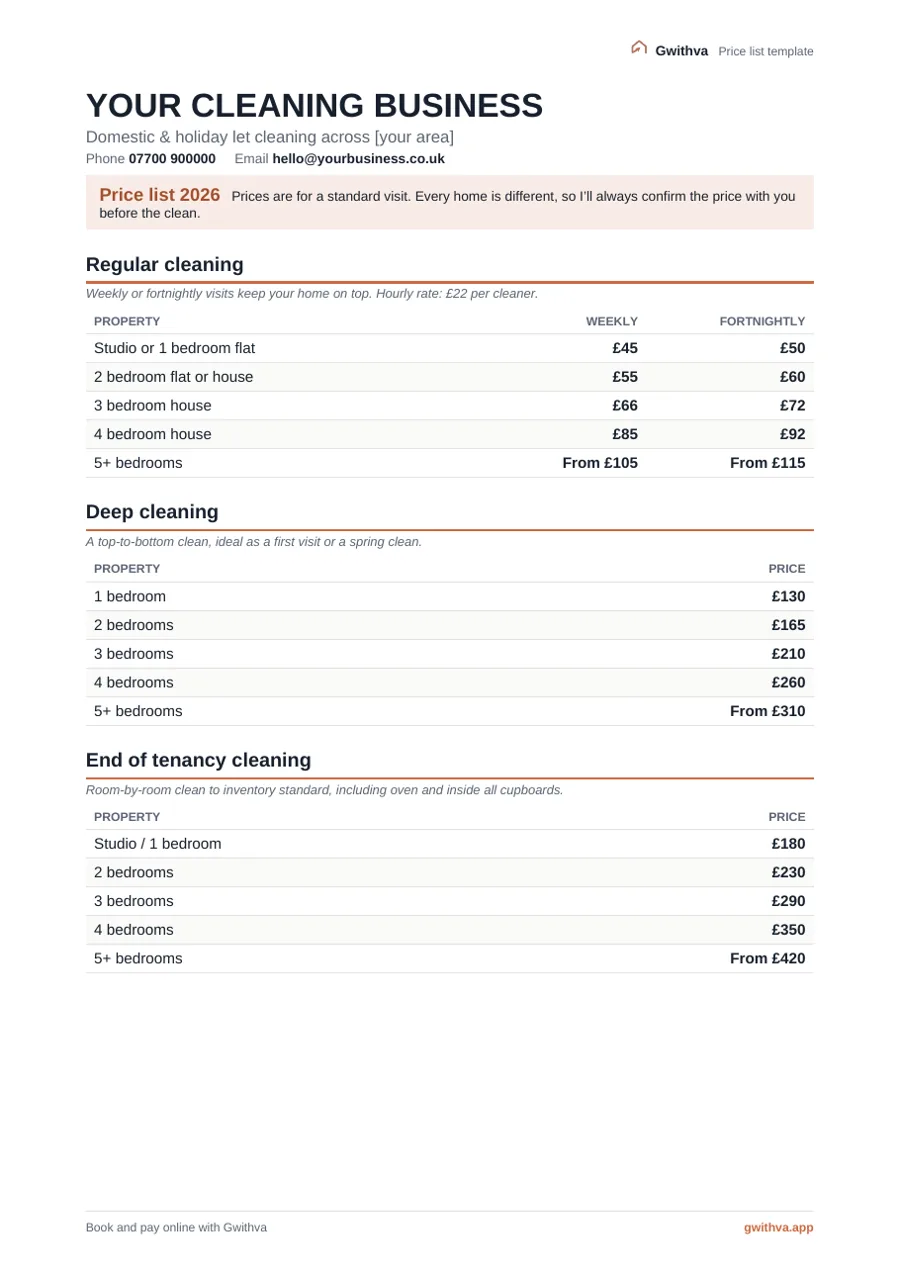
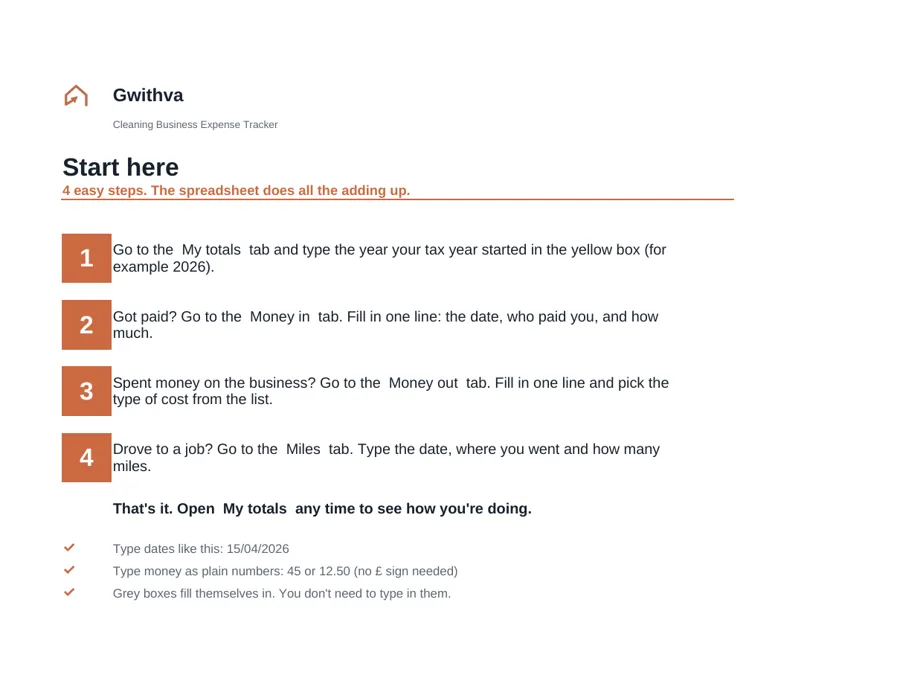
Work out your prices from what you want to earn and what the business costs to run. The free price calculator does this for you. Then set up a simple way to send invoices and track expenses from day one.
4. Get your kit
A reliable vacuum, microfibre cloths, a mop and bucket, and a basic set of products is enough to start. Use colour-coded cloths so kitchen and toilet cloths never get mixed up. Keep the safety data sheets for every product you use.
5. Write your policies
Agree how you work before problems come up: what's included, cancellations, how you look after keys, and what happens if something gets broken. Customers trust cleaners who are clear about this.
6. Find your first customers
Most cleaners get their first customers from people they know, local Facebook groups and a free Google Business Profile. Ask every happy customer for a review and a recommendation.
7. Prepare for your first job
Send a written quote, confirm access, parking and pets, and take a printed checklist with you. Follow up the next day to check they're happy and book the next visit.