Why end of tenancy cleans need their own checklist
When a tenant moves out, the landlord or letting agent compares the property with the check-in inventory. Anything dirtier than at the start, apart from fair wear and tear, can come out of the tenant's deposit. That's why these cleans go much deeper than a regular clean: inside every cupboard, behind the fridge, the oven racks and the window tracks.
Missing one area can mean a call back to the property, unpaid time, and an unhappy customer. A checklist you work through every time is the simplest way to avoid that.
How to use it
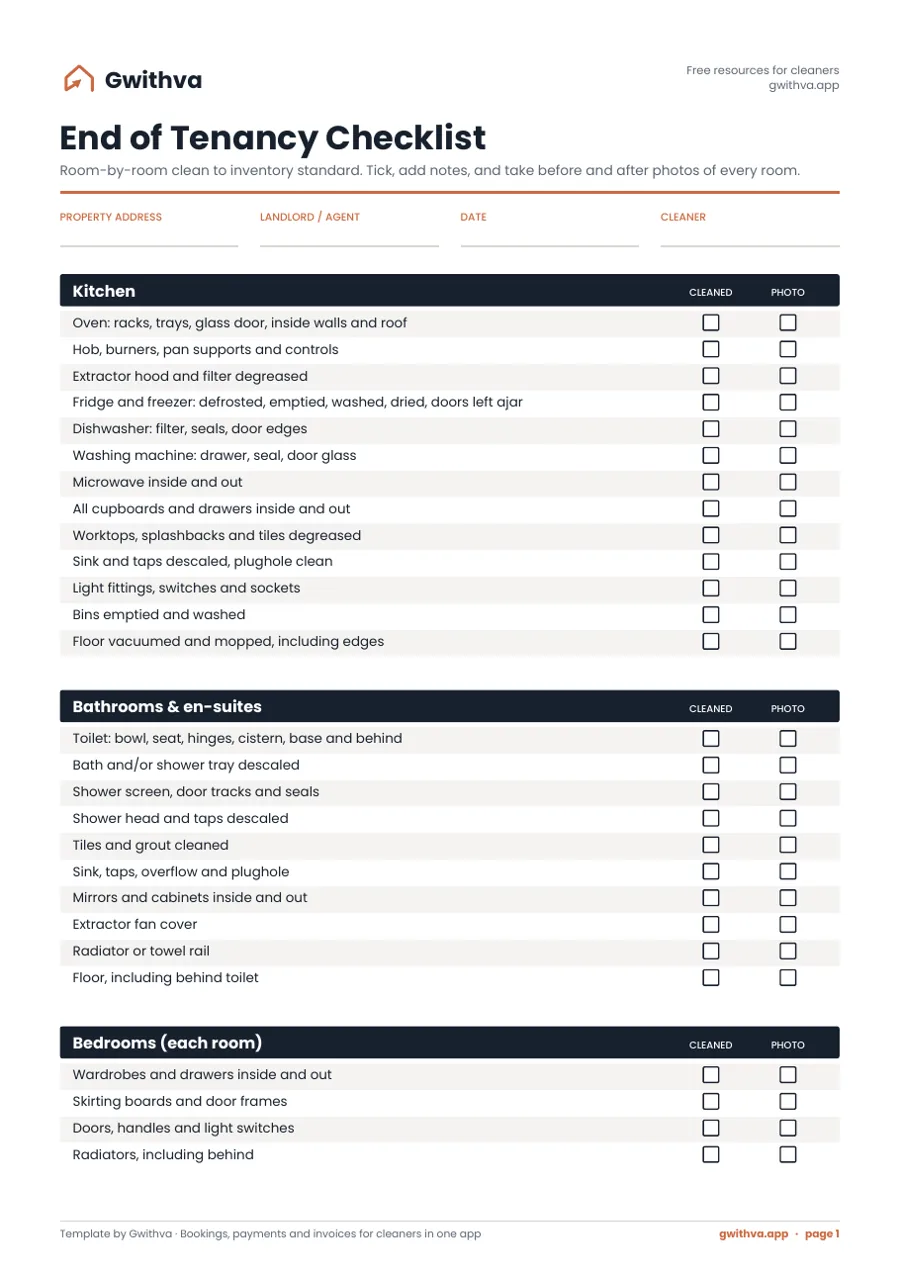
- Take before photos of every room when you arrive, including inside the oven and fridge.
- Work room by room. Tick "Cleaned" as you finish each task.
- Take after photos from the same angles, and tick "Photo".
- Note anything that wouldn't come out, like old carpet stains or limescale damage, in the notes box.
- Sign it off and ask the agent, landlord or tenant to check and sign if they're there.
The areas most often missed
- Oven door glass (between the panes, where you can reach) and the grill pan.
- Fridge and freezer seals, and the drip tray under the fridge.
- Extractor fan filters and the top of kitchen units.
- Shower screen tracks, taps and shower heads (limescale).
- Skirting boards, door frames and light switches.
- Inside window tracks and the tops of radiators.
How long does an end of tenancy clean take?
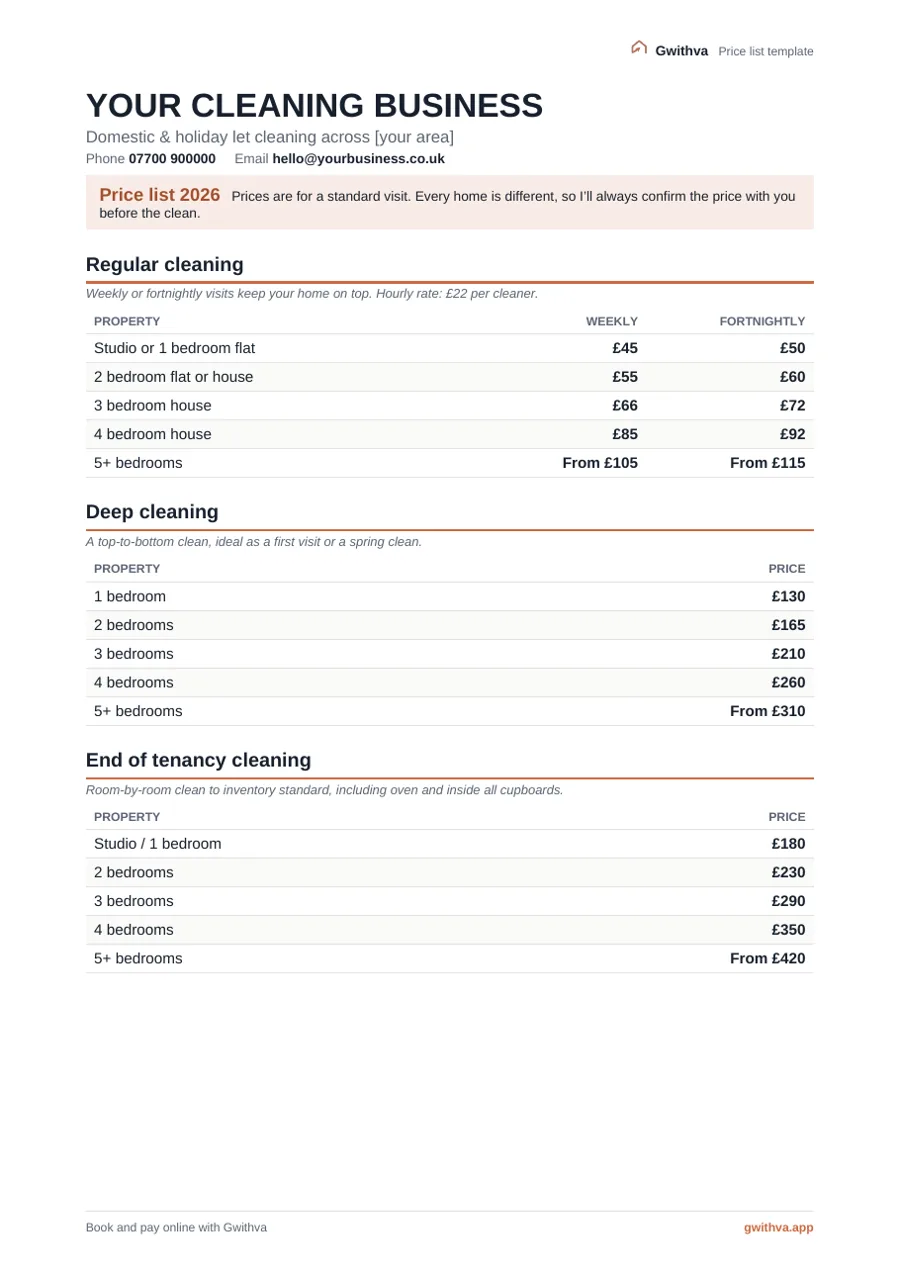
It depends on the property and its condition. As a rough guide, one cleaner might need 5 hours or more for a 1 bedroom flat, and 10 hours or more for a 3 bedroom house. Bringing a second cleaner halves the time on site. Price these jobs carefully. Our price calculator treats end of tenancy as 2.5 times longer than a regular clean by default, and you can change that.